Key Takeaways
- Standard audio ads remain highly effective for driving broad awareness and recall.
- Host-read ads are powerful tools for building trust, emotional connection, and intent.
- Longer host-read executions deepen message retention and accelerate purchase among high-intent consumers.
- Dynamic and interactive formats increase perceived relevance and prompt action, especially among in-market and younger audiences.
Audio has quietly become one of the most consistent media companions in modern life. It meets us in the moments that screens aren’t a part of. Commutes, workouts, household routines, and even moments of rest are increasingly powered by radio, streaming, and podcasts.
For marketers, that habitual presence raises a fundamental question: If audio accounts for such a large share of daily media time, why has it so often been treated as a supporting channel rather than a strategic driver?
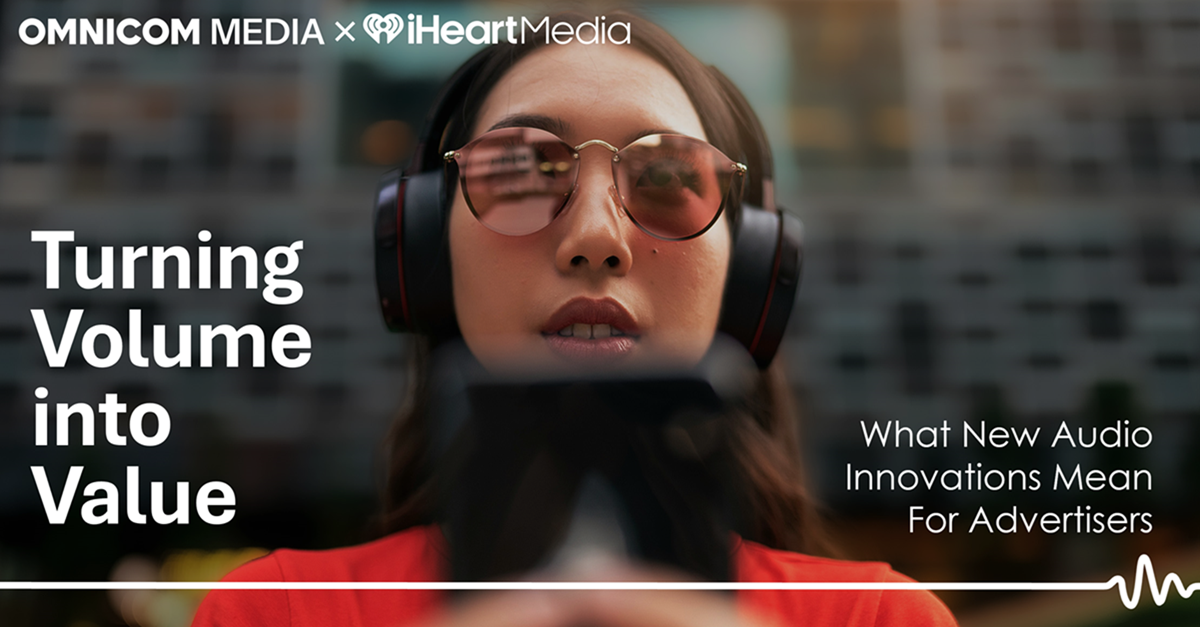
In a new research Turning Volume into Value: What New Audio Innovations Mean for Advertisers, conducted by Omnicom Media Intelligence in partnership with iHeartMedia, we evaluate how credible voices, personalized creative, and interactive ad formats can meet different marketing objectives.
After all, audio’s value isn’t just in reach; it lies in how different formats shape trust, relevance, and decision making across the funnel. When brands move beyond a one-size-fits-all approach and align audio innovations to specific marketing objectives, audio becomes a performance engine rather than background noise.
Trust Is Audio's Core Currency
At the heart of audio’s effectiveness is the human voice. 9 in 10 consumers say human trust can’t be replicated with AI.
Listeners don’t experience audio the way they experience display or even video. They build relationships with voices over time. Hosts become familiar presences, sources of information, and, in many cases, trusted companions.
We already know that 70% of consumers are using AI, and yet 90% of consumers say it’s still important to know that media is created by a real person. Audio that is guaranteed human, with live hosts who have a relationship with consumers, is the antidote to the algorithms and echo chambers.
The best part? Our newest research shows that this trust is transferable. Host-read advertising consistently outperformed standard voiced ads on measures tied to brand trust and emotional connection.
Messages delivered by trusted hosts generated stronger gains in brand trust and intent than traditional spots, reinforcing the idea that the personal relationship listeners develop with on-air personalities shapes how brand messages are received. When a recommendation comes from a voice the consumer already knows, it feels less like an interruption and more like genuine endorsement.
For marketers, the implication is significant. In categories where credibility matters or where consumer skepticism is high, the messenger is not just a creative detail but also a strategic lever. Audio allows brands to borrow trust at scale in a way few other channels can replicate.
Format Choices Shape the Funnel
One of the most important contributions of the new Turning Volume into Value: What New Audio Innovations Mean for Advertisers research is clarity around how different audio formats perform against different marketing objectives.
For broad awareness and recall, standard audio ads remain highly effective. In the study, traditional spots delivered strong lift across core brand metrics, including
- Unaided recall (+22 points)
- Brand favorability (+5 points)
- Search intent (+6 points)
- Purchase intent (+5 points)
These results reinforce audio’s strength in driving mental availability and reinforcing brand presence at scale.
When the objective shifts from awareness to trust and emotional connection, host-read ads demonstrate clear advantages. The authenticity and familiarity of a host’s voice elevate how messages are received, delivering stronger gains in brand trust and intent than standard creative.
Depth becomes even more important when brands want to improve message retention. Longer host-read executions generated 2X the recall of 30 second, host-read ads and were associated with faster purchase timelines among listeners already inclined to buy. In moments where consumers are progressing toward conversion, additional time and storytelling can materially influence outcomes.
Innovation also plays a meaningful role further down the funnel. Dynamic ads proved effective at increasing perceived relevance and encouraging search behavior. Personalized ad delivery increased agreement that the ad felt relevant (80% versus 73% for standard ads) and produced substantially higher lift in search intent (+11 points compared to +3 points).
To prompt action among in-market or younger audiences, interactive motion-activated ads delivered incremental lift in both search intent and purchase intent. These formats transform audio from a passive experience into one that invites direct engagement, particularly among audiences primed to act.
What emerges is not a hierarchy of formats but a complete toolbox. Each execution does something different, and together they equip audio to support a full funnel strategy.
Audio as Multiplier, Not Standalone
One of the most underappreciated insights from the new research is audio’s multiplier effect. Audio works especially well as a primer for other channels. Exposure through audio increases responsiveness to social, digital, and search activity that follows.
This reframe is critical for planning conversations that often pit channels against one another. Audio should not be evaluated solely on direct response in isolation. Its true value is in what it enables elsewhere. When audio builds memory, relevance, and trust early, subsequent touchpoints become more efficient.
Innovation Works Best When It Remains Human
The trials also deliver a clear message about innovation. Technology by itself doesn’t drive effectiveness; human relevance does.
- Dynamic creative works because it reflects the listener’s moment.
- Interactive formats work because they offer utility and choice.
- Long form host reads work because they deepen understanding and reinforce trust.
In each case, innovation succeeds when it enhances the human experience rather than distracting from it.
For brands testing new formats, the question should be simple: Does this innovation make the message feel more personal, more useful, or more trustworthy? When the answer is yes, performance will follow.
From Planning by Channel to Planning by Objective
Ultimately, the biggest takeaway from the research is strategic rather than tactical. Audio planning works best when it starts with objectives over formats.
Awareness goals benefit from consistency and scale. Trust and brand equity benefit from credible voices. Consideration benefits from time and storytelling. Conversion benefits from relevance and interaction. Audio can support all these outcomes but rarely with a single execution.
As audio continues to evolve, its role in the media mix becomes clearer. It’s not a legacy channel or a niche addition. It’s a flexible, full funnel medium built on something no algorithm can replace: the trusted human voice.
Want to learn more about the new Omnicom Media Intelligence x iHeartMedia research?
Ready to grow with iHeart?
Learn about advertising with iHeartMedia.